Patsy McKeever knew her husband needed something different.
This summer, Cecil McKeever was recovering from a stroke in a Wichita hospital when he began experiencing hospital delirium, a condition that causes confusion, restlessness and agitation. As physicians discussed transferring him to a nursing home, McKeever, a certified nursing assistant with more than four decades of experience, pushed for a better option.
She wanted him back home in Harper County, receiving care at Patterson Health Center, just minutes from their home in Attica.
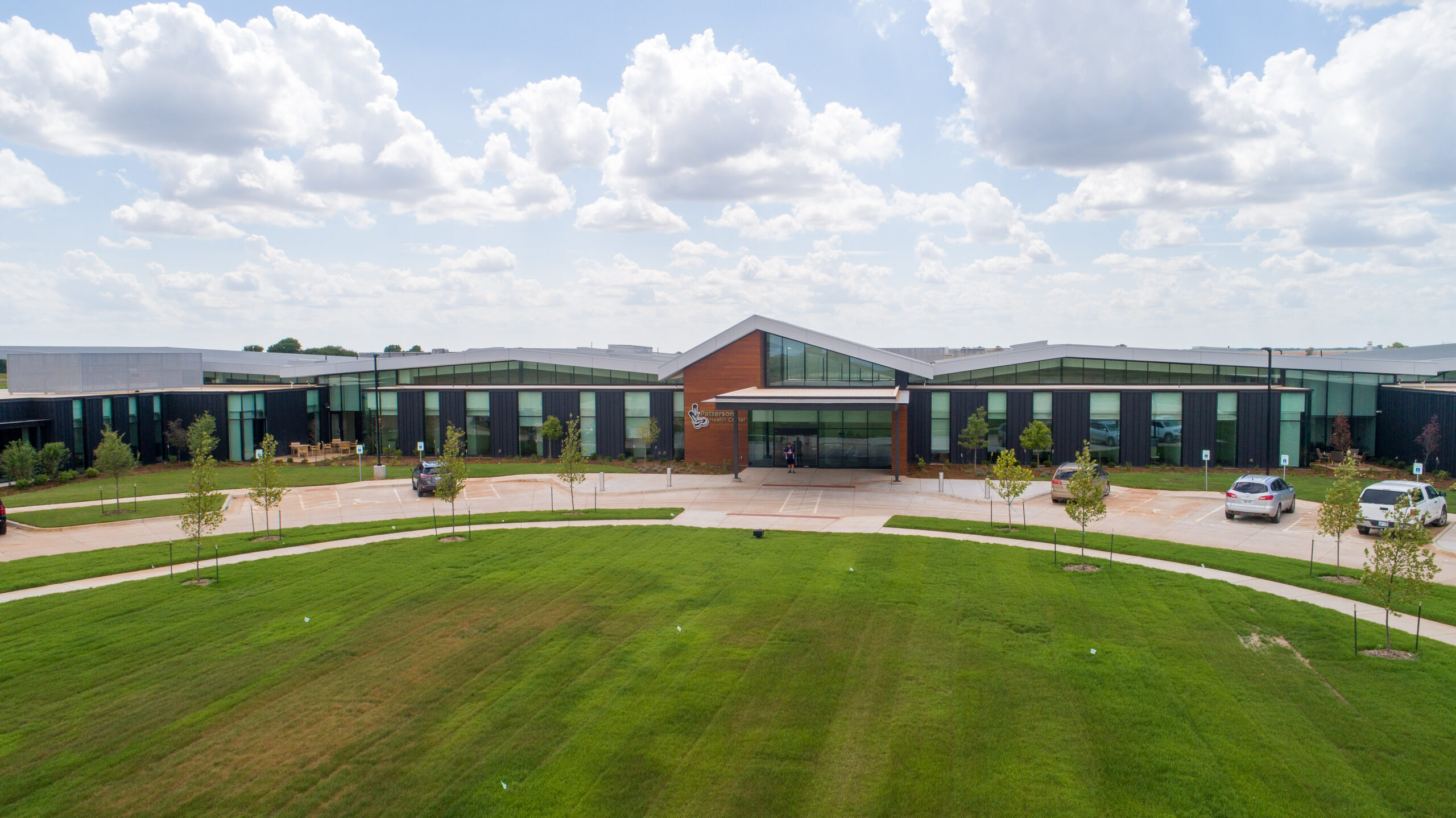
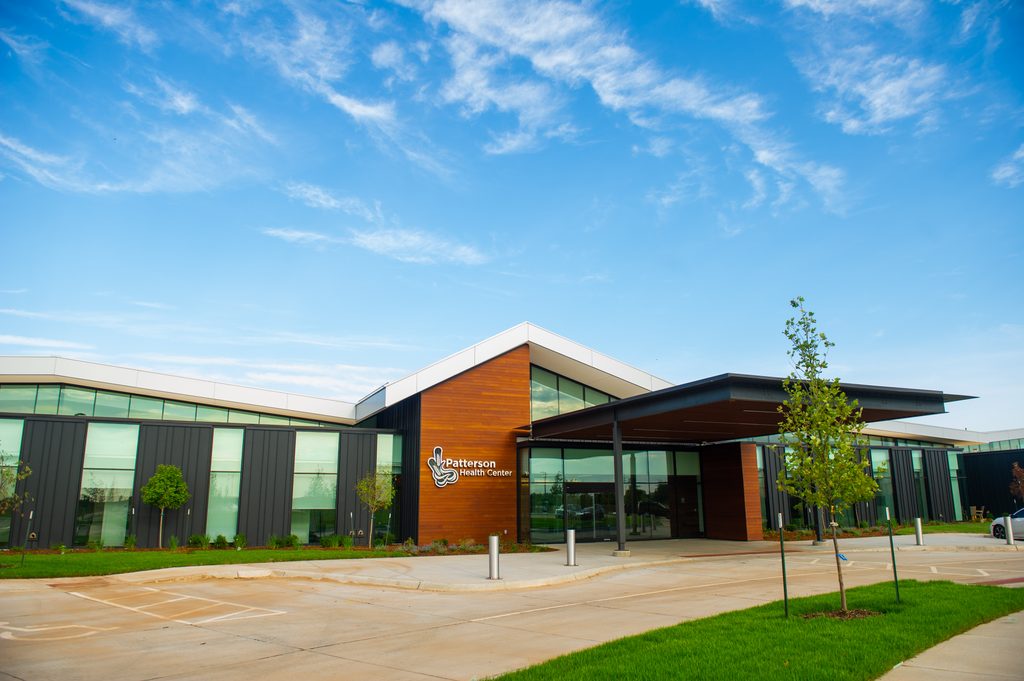
“On that third day I took my phone, I pulled up a picture of the hospital and showed her (the hospitalist) pictures of the rooms inside Patterson Health Center where the big windows go from ceiling to floor,” Patsy McKeever said. “When she saw the picture of the hospital and where it was located, and being able to see outdoors, see open spaces, and being around people he knew, she agreed with me it was the absolute answer to where we needed to be going.”
The very next day, Cecil McKeever was transferred to Patterson Health Center’s skilled swing bed program. He remained there for several weeks until he was strong enough to go home and, according to Patsy McKeever, he never experienced delirium again.
“We had the best care there,” she said. “You just can’t say enough about that family that works at Patterson, because they are fabulous.” For Patterson Health Center leaders, the McKeevers’ experience reflects exactly why the hospital exists: To provide high-quality healthcare close to home.
Today, the 14-bed critical access hospital and its team of more than 150 employees provide Level IV Trauma Center emergency care, primary and specialty care, skilled swing bed services, rehabilitation, behavioral health services, diagnostics, telehealth, and a range of preventive health programs.
“I think it was difficult for people at the beginning. Harper and Anthony Hospitals were a source of pride for these communities,” said Sarah Teaff, Patterson Health Center chief executive officer. “But over time, I have witnessed how grateful people are for this facility and the people who work here.”
That gratitude is reflected in more people using the hospital and its associated clinics over the years.
The hospital is expected to provide more than 1,000 days of local post-acute and rehabilitation care this year, while maintaining roughly 3,300 annual specialty care visits by local care specialists and other outside specialty providers who routinely visit the area.
Through the first half of 2026, Patterson Health Center’s rural health clinics in Conway Springs and Attica provided 8,776 patient visits and are on pace to provide approximately 17,500 visits this year.
Teaff said the hospital is continuing to shift its focus toward prevention, managing chronic illnesses, and helping residents address health issues early to prevent crises.
Recently, Patterson Health Center was awarded $150,000 in Rural Health Transformation Program funds to expand diabetes care through the Community Health Worker + Accountable Food is Medicine Grant Program. These funds will allow the facility to continue advancing prevention and disease management efforts.
Food is Medicine is an approach that integrates “food-based nutritional interventions into healthcare to treat or prevent disease,” and often combines medically tailored groceries or meals with counseling and ongoing support, according to the Tufts University Food is Medicine Institute.
Another effort to assist with chronic disease management and prevention, and to reduce the cost of care, is a mobile integrated healthcare pilot program developed in partnership with Norwich EMS and supported by the Patterson Family Foundation. The model has gained traction in other areas and is a fairly new initiative for Patterson Health Center that allows paramedics, community health workers, and care teams to provide certain services, like blood pressure and blood sugar checks, directly in patients’ homes, helping reduce unnecessary emergency department visits while improving access to care and connecting patients to primary care services.
The critical access hospital is working with insurance companies to pay for some of those services when 911 calls may not have been a true emergency but required medical professionals to treat in place.
“Some people come through our doors because they’re looking for connection and someone to talk to,” Teaff said. The emergency department currently treats roughly seven to eight patients in total each day. “In a rural community, sometimes the hospital becomes that point of connection.”
Without both hospitals working together to create a more sustainable healthcare model in Harper County, these innovative programs might not be possible.
“We are increasing healthcare infrastructure that allows people to receive primary care, specialty care, emergency care, diagnostics, preventive services and recovery care without routinely leaving their community,” Teaff said.
Hospital leaders are also listening to community members and expanding behavioral health and addiction services.
“We are trying to be responsive to the needs of our community,” Teaff said. “I think we are blazing a trail, to some extent, among critical access hospitals in the state of Kansas by opening an access point to opioid use disorder medication in the Emergency Department.”
Listening to the community also means learning which services can be sustained and adapting when they cannot.
The community rallied around local healthcare by raising $200,000, alongside the Harper County Health Foundation, to bring dialysis services closer to home. Unfortunately, like many rural providers, Patterson Health Center found that the reimbursement structure for outpatient dialysis did not adequately support the cost of delivering the service, ultimately making the program unsustainable. This reimbursement gap is one of many challenges facing rural providers that the system needs to address.
Patterson Health Center’s approach to telemedicine also reflects its commitment to listening and responding to community needs.
When the hospital first introduced telemedicine services, it partnered with an external provider to expand access to care. Through patient feedback, hospital leaders learned that many community members preferred connecting with providers they already knew and trusted during their hospital stays. In response, the hospital adapted its telemedicine model to prioritize local providers whenever possible. While the change had little financial impact, it significantly improved patient experiences, demonstrating the hospital’s willingness to evolve its services based on what matters most to the people it serves.
“We don’t get it right every time, but we work very hard to earn and maintain the trust of our community,” Teaff said. “When we miss the mark, we do what we can to make it right.”
Building the Next Generation of Rural Healthcare Workers
Meeting community needs requires more than just state-of-the-art facilities and services. It also requires having the right people.
To strengthen its workforce pipeline, Patterson Health Center partners with area foundations, universities, technical colleges, and local public schools to expose students early and often to healthcare.
It also works alongside the Harper County Health Foundation, a major proponent of supporting a “grow your own” workforce. They support both hospital staff looking to continue their education and students pursuing healthcare degrees.
Additionally, the hospital has partnered with the Harper County Transition to Career Program, a countywide initiative established in 2018 by Attica USD 511 and Chaparral Schools USD 361. The program gives students opportunities to explore careers through presentations from local professionals, job shadowing, internships, and earning professional certifications before they graduate.
“It brings a lot to students, because it gives them so much opportunity to speak with somebody, to learn from them, to see things that aren’t necessarily within the community that they can maybe bring back to the community, or just jobs here that they didn’t realize were available,” said Michelle Sullivan, lead coordinator of the Harper County Transition to Career Program.
For Patterson Health Center, the partnership is part of its community benefit and creates an opportunity to introduce local students early and often to healthcare careers, increasing their likelihood of choosing healthcare in the future.
One of those students is Chase Struble, a 2025 graduate of Chaparral Jr/Sr High School, located right next to the hospital, who is pursuing a Physical Therapist Assistant degree at Washburn University.
Through Harper County’s Transition to Career Program, Struble interned at Patterson Health Center before college and recently returned to complete a six-week clinical rotation.
The experience reinforced both his interest in physical therapy and his desire to potentially return home after graduating college.
“It was kind of cool to be able to help people who have helped you throughout your life,” Struble said.
Nathan Bedel has recently joined the healthcare facility as director of its rehab department and has seen the impact local folks can have on their patients’ care.
“His ability to be able to connect with patients that he knows drives their motivation to get better,” Bedel said about Struble. “It’s an asset when you’re local and know different families and you know the different people – the patients love that.”
Patsy McKeever saw that connection firsthand during her husband’s recovery. Because Struble was a familiar face in the community, Cecil McKeever immediately felt comfortable working with him, and the encouragement and rapport Struble brought to therapy sessions helped keep him engaged in rehabilitation.
An Emphasis on Recovery Close to Home
Keeping patients connected to family, friends, and familiar surroundings remains central to Patterson Health Center’s mission.
“We try to get our patients back here when they are transferred to receive specialized medical treatment for their health conditions,” said Crissa Foley, emergency department and trauma services director. “We want to be the place they return to for the continued care they need closer to home, where they can be with the people they love.”
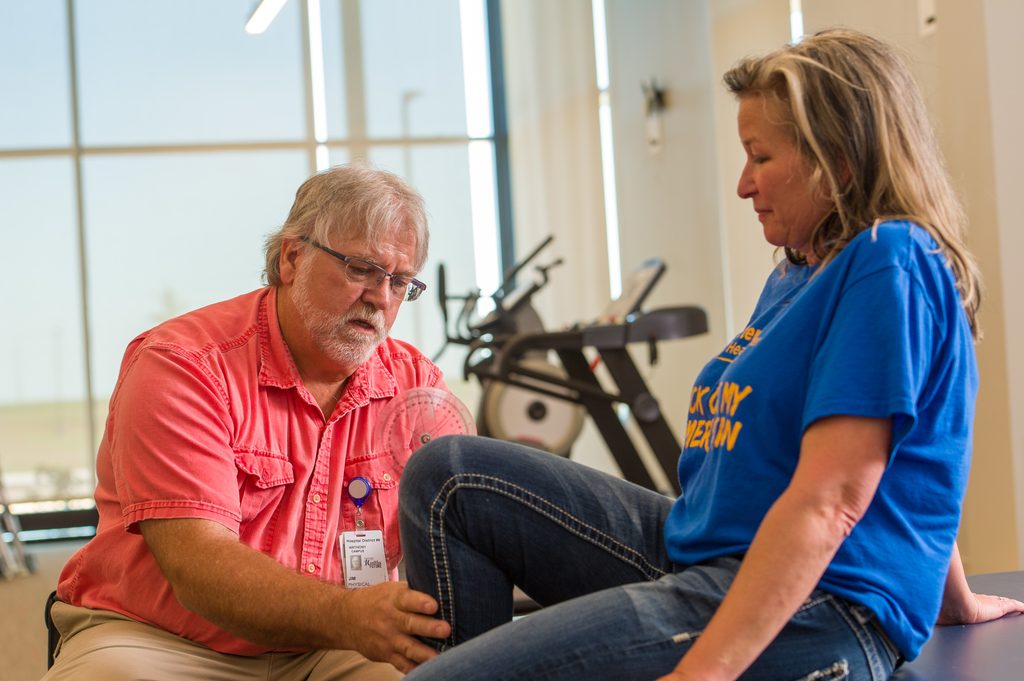
The hospital’s rehabilitation department plays a key role in that effort, offering inpatient and outpatient physical therapy, occupational therapy, speech therapy, cardiopulmonary rehabilitation, and aquatic therapy. These services allow many residents to avoid frequent trips to larger cities for ongoing treatment.
The team makes a point to visit swing bed patients twice a day, compared to the standard once a day, to accelerate recovery and help patients safely return home and regain independence.
“We strive to put a good quality product out there, that way it convinces someone to take valuable time out of their day to see us,” Bedel said. “Families don’t have to go to Wichita to see excellent care – they can get it right here in the community.”
Investing in the Community’s Future
Beyond providing healthcare, Patterson Health Center serves as one of Harper County’s largest employers and an important community partner.
Hospital leaders recognize that attracting healthcare professionals to rural communities requires more than competitive wages and a state-of-the-art facility. Housing, schools, childcare, and other quality-of-life factors all influence recruitment and retention.
As a result, the organization works alongside other community partners on broader initiatives designed to strengthen Harper County’s future.
“Usually once they get here, they recognize what a beautiful facility it is and they want to work here,” Teaff said. “But, we also must be rooted in community by working with our local partners to ensure housing, childcare and schools are strong.”
The health facility also takes great pride in being a gathering place for all generations in the community.
“We want to be a place the community can turn to in times of sickness, but also a place where people can come together to share a meal, hold a community meeting, or simply connect with one another,” Teaff said.
Even as Patterson Health Center navigates reimbursement pressures, workforce needs and competition from larger healthcare systems, growth in key areas and the strength of its team give Teaff confidence about what comes next.
“We’ve seen growth in key areas, and I believe deeply in the team we have in place,” she said. “They care about this community, they care about their patients, and they understand what’s at stake. We’re not just working to survive – we’re working to make sure rural healthcare has a future here.”
For Patsy McKeever, the value of having high-quality healthcare close to home was never more apparent than during her husband’s recovery.
Although she admits she may be slightly biased after working at Patterson Health Center for five years, she never wanted her husband cared for anywhere else.
“There’s having a job and doing it, and having your heart in it,” she said. “And their heart is in it.”
Acknowledgements:
This story is written in memory of Neal Patterson, who, alongside his wife Jeanne, founded the Patterson Family Foundation and whose vision laid the groundwork for the community to create a sustainable model of rural healthcare delivery in Harper County.
Thank you to everyone who was interviewed and contributed to the final story: Nathan Bedel, Kristen Birket, Crissa Foley, Patsy McKeever, Chase Struble, Michelle Sullivan, and Sarah Teaff.