A Patterson Family Foundation grant is helping Kansas State University’s Technology Development Institute reduce barriers for rural innovators while providing hands-on learning opportunities for students across rural Kansas and western Missouri.
When a fifth-grade class from Almena, Kansas, visited a local workshop to see a specialized aircraft mover invented by hometown inventors to move large aircraft in tight spaces, it was more than a field trip. It was a glimpse into what can happen when rural ideas gain access to the right resources.
“They were excited,” said Shad Chandler, who leads product development at RPMC LLC of Almena. “The teacher, Kirsten Baird, said she’d been teaching 28 years, and this was the first time she got to show something invented in our hometown of Almena. I’d like to think they were inspired by it.”
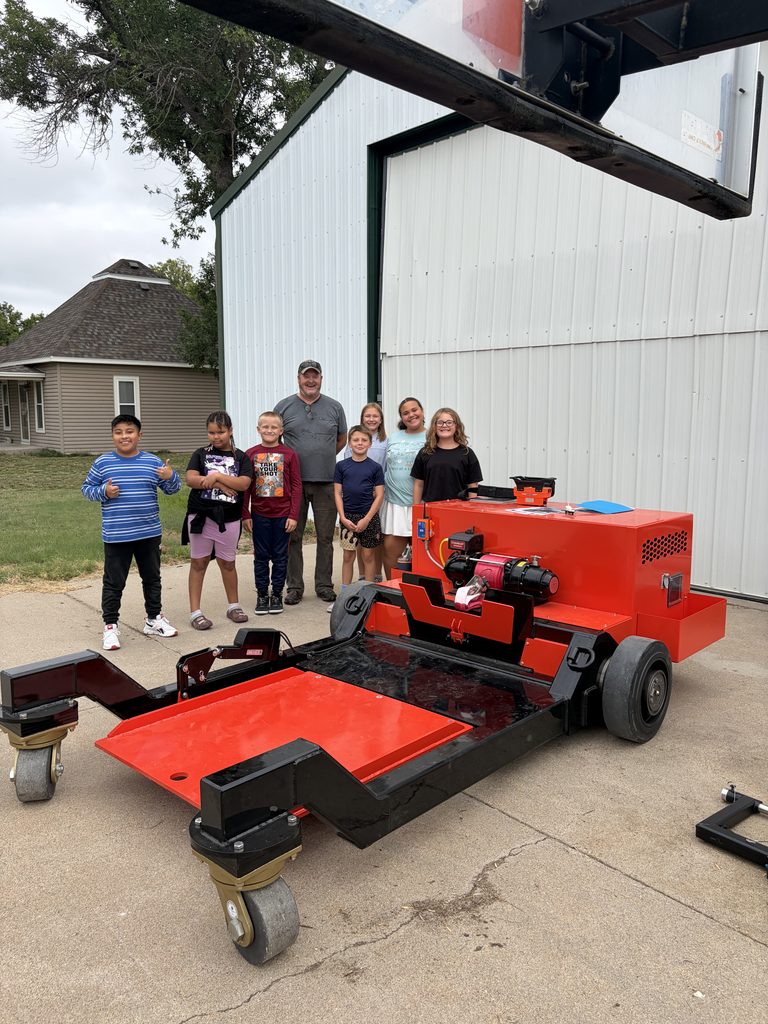
Photo courtesy of Shad Chandler
Shad Chandler encouraged the fifth graders to follow their dreams and remember that even if resources are limited, there is a way forward and there is support available.
For the Chandlers, that support came through Kansas State University’s Technology Development Institute (TDI), an applied engineering and business innovation center that helps entrepreneurs, manufacturers, researchers, and communities transform ideas into commercially viable products.
With the help of a two-year, $1 million Patterson Family Foundation grant that began in August 2025, the Rural Technology Innovation Assistance Program allows TDI to offset up to 50% of eligible project costs for rural innovators and businesses across Kansas and western Missouri. The funding also supports mentorship and paid internships for students from these rural communities.
For many rural entrepreneurs, access to technical expertise and early-stage development support can determine whether an idea moves forward or remains on the drawing board.
“A lot of people in rural areas don’t have access to the capital they need to get projects going,” said Bret Lanz, TDI commercialization director. “So having the ability to offset some of that upfront cost was huge to get these things kickstarted.”
The institute works with businesses to evaluate market opportunities, conduct patent research, develop prototypes, improve manufacturing processes, and market and commercialize new technologies.
TDI fills an important need for rural communities that may not have easy access to engineering, product development, automation, and commercialization resources.
“Really what we’re trying to do is figure out how we close that gap so innovators can be competitive regardless of where they choose to live and work,” said Jeffrey Tucker, TDI executive director.
Since the grant launched in August 2025, TDI has engaged with 50 rural Kansas and western Missouri businesses and innovators. Projects have ranged from drone lifting platforms, farm equipment, hunting blinds and decoys to 3D scanning, feedlot behavioral-modification devices, and airplane movers.
One recent example comes from Shad and Hunter Chandler, a father-and-son team from Almena, located in Norton County, Kansas.
Hunter Chandler grew up flying with his dad, Shad Chandler, who was always tinkering with an airplane he was building in the workshop across from their home. Shad Chandler, a local businessman, flew Luscombe and Husky airplanes with Hunter Chandler from the grassy landing strip outside of Almena to airports throughout the region.
“It’s always been part of something we did together,” Hunter Chandler said.
After the COVID-19 pandemic, conversations about aircraft-handling equipment led them to develop a small personal aircraft mover that attaches to a mower or a small tractor. As innovators and resourceful entrepreneurs, Shad and Hunter Chandler recognized a need for a practical, relatively inexpensive way to maneuver personal aircraft into tight hangars using equipment many owners already had on hand.
After hearing at an airshow about the challenges of maneuvering narrowbody airliners, such as a Boeing 737, Shad Chandler shifted their focus to commercial aircraft and worked with Skrdlant Welding/Fabrication, a local welding and fabrication shop, to build a steel prototype of a low-profile aircraft mover. As the project took shape from a napkin sketch, word spread.
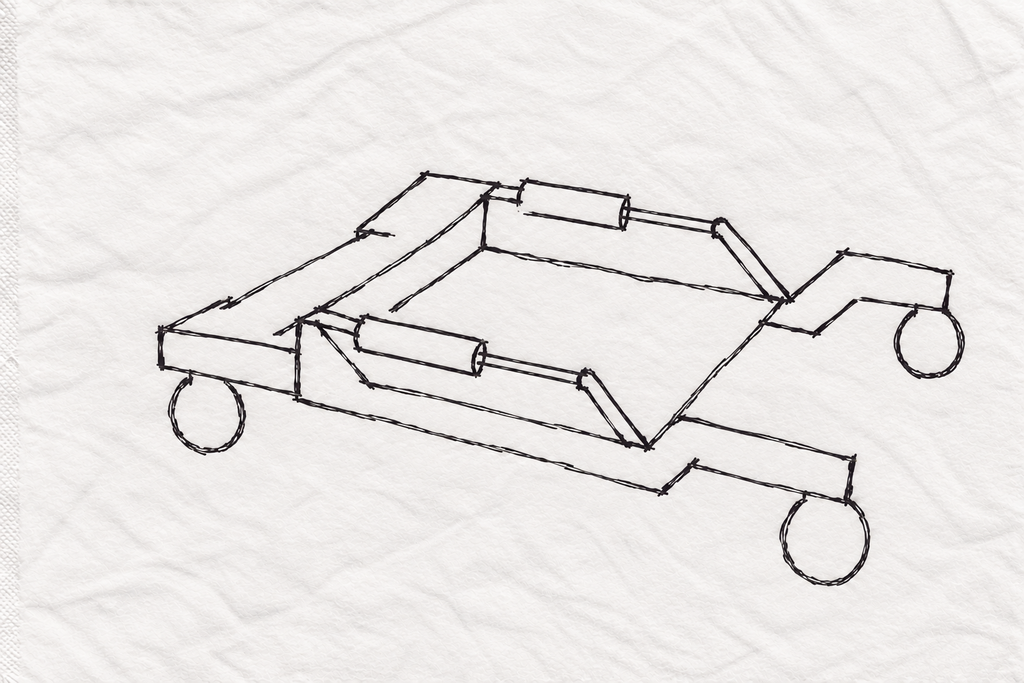
Photo courtesy of Shad & Hunter Chandler
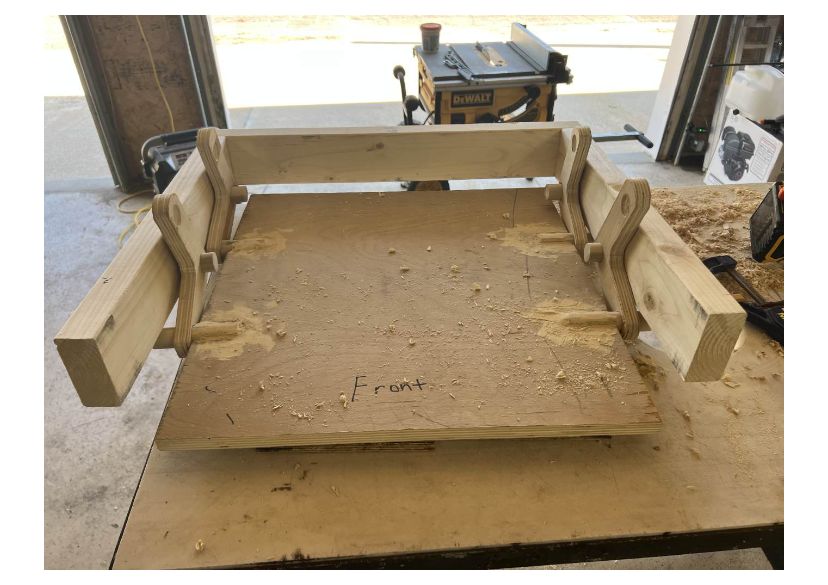
Photo of courtesy of Shad & Hunter Chandler
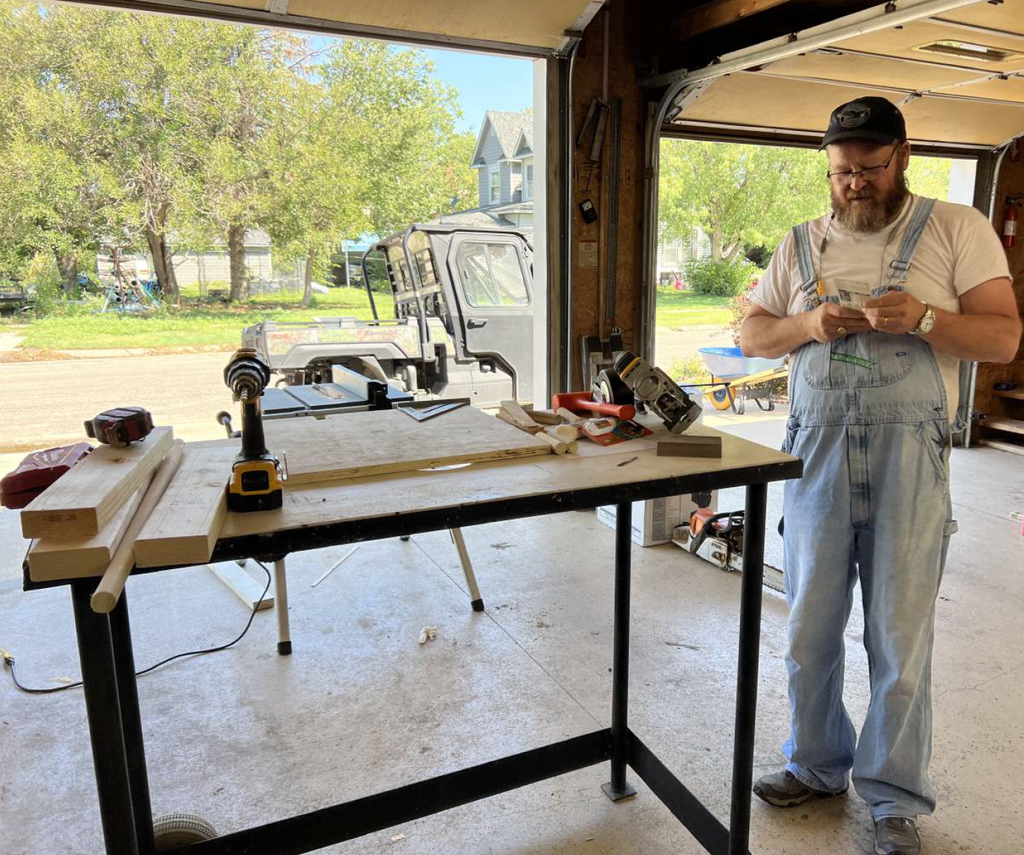
Photo of courtesy of Shad & Hunter Chandler
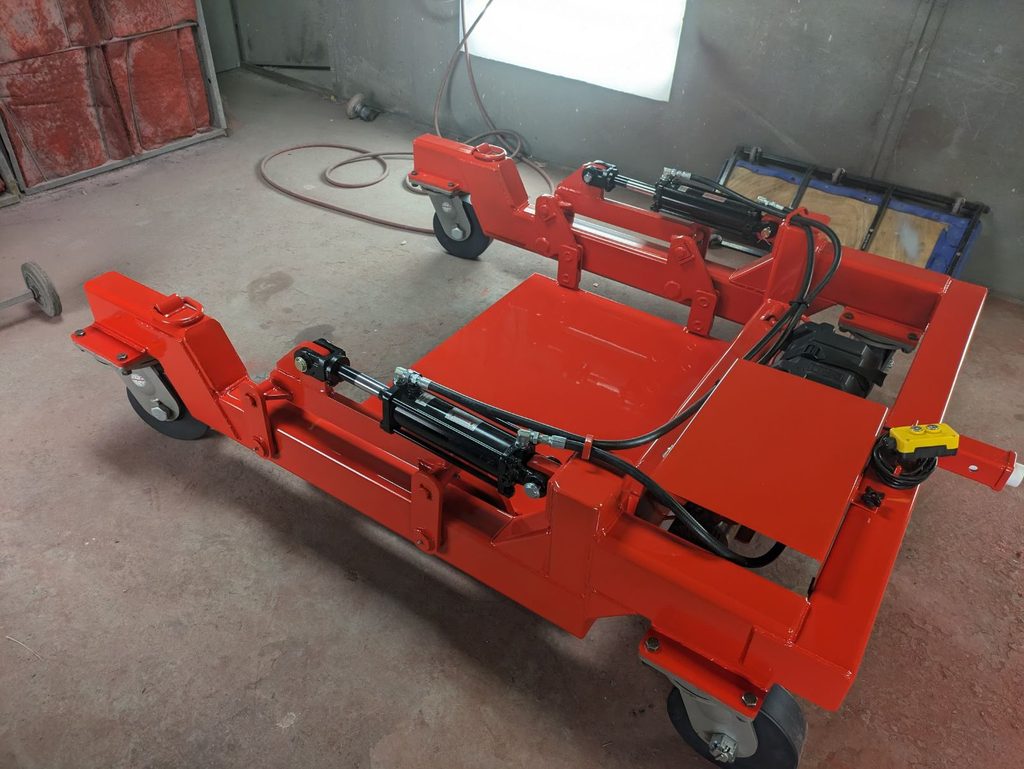
Photo courtesy of Shad & Hunter Chandler. Prototype the Chandlers manufactured with Skrdlant before TDI’s assistance.
“After a couple of weeks, farmers were driving out to the welding shop for no other purpose than to see the aircraft mover,” Shad Chandler said with a chuckle.
To move beyond the steel prototype stage, the Chandlers turned to a network of Kansas partners.
Cedrick Green of Driftwood Design in Atwood, Kansas, transformed the steel concept into professional, engineering-stamped drawings, while the Northwest Kansas Economic Innovation Center, the Kansas Department of Commerce, and TDI, in partnership with Patterson Family Foundation, helped connect the family with resources and $105,000 in funding, some of which the family matched through personal investment.
Through the Rural Technology Innovation Assistance Program, TDI provided the Chandlers with market research, engineering support, prototype fabrication assistance, and commercialization guidance that helped advance the project from concept to a working demonstration unit.
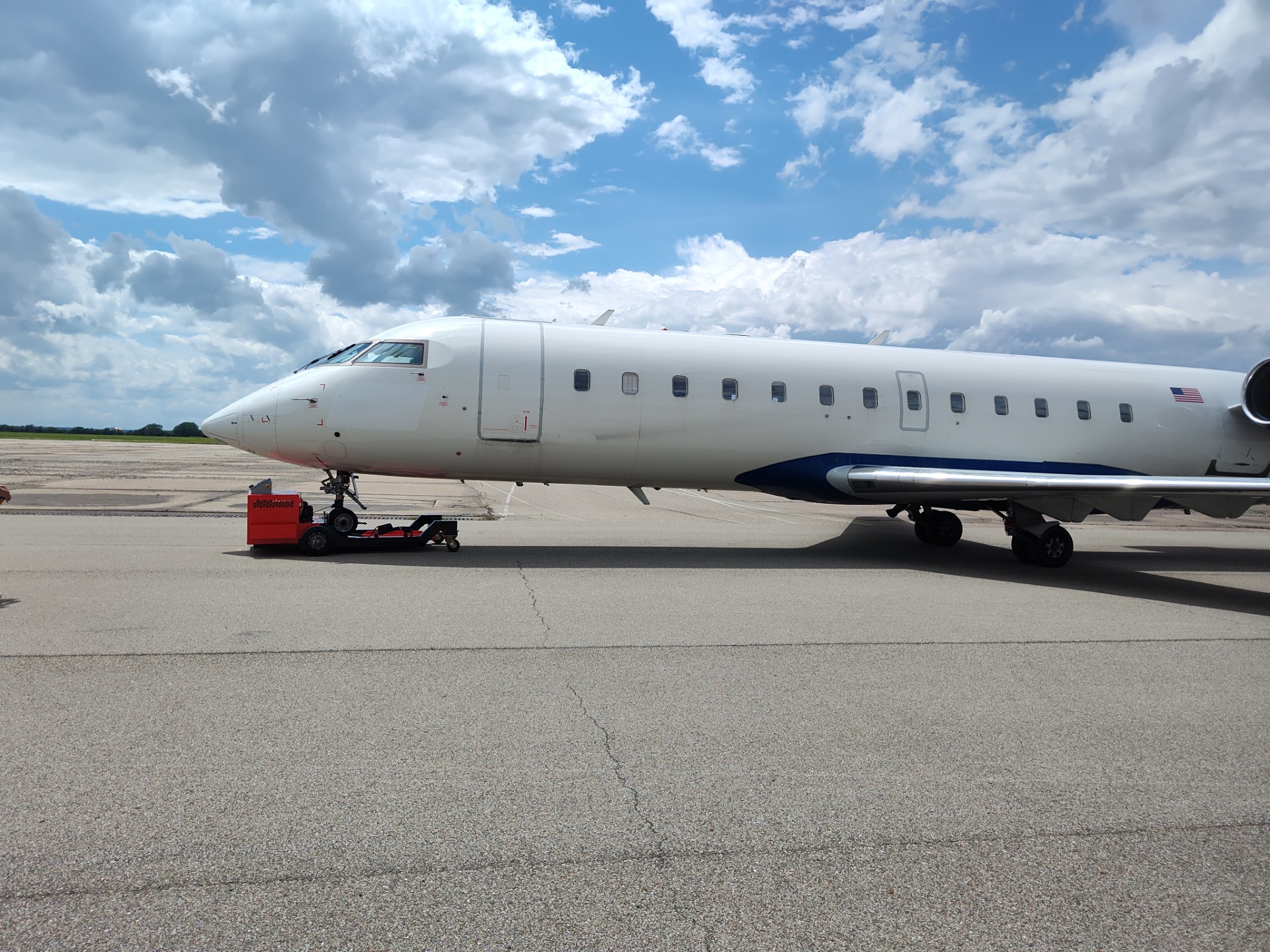
The current prototype is a powered, remote-controlled aircraft mover designed to help maintenance, repair, and overhaul (MRO) facilities maneuver narrowbody commercial airliners more efficiently while maximizing hangar space – and ultimately, their bottom line.
Several aircraft movers are available for small business aircraft, but TDI found relatively few affordable options for larger commercial airplanes and MRO facilities.
The technology addresses a practical challenge. Traditional equipment is very expensive and can make it difficult to maximize hangar space, while the Chandlers’ low-profile, remote-controlled design can maneuver aircraft more precisely and fit beneath narrowbody commercial airliners.
“You can’t get an airplane any closer in the corner with any other tow device,” Shad Chandler said. “It makes hangar space much more efficient.”
The aircraft mover also aligns with the aviation industry’s shift toward electric-powered ground equipment.
For the Chandlers, TDI helped bridge the gap between a promising idea and a product ready for the marketplace.
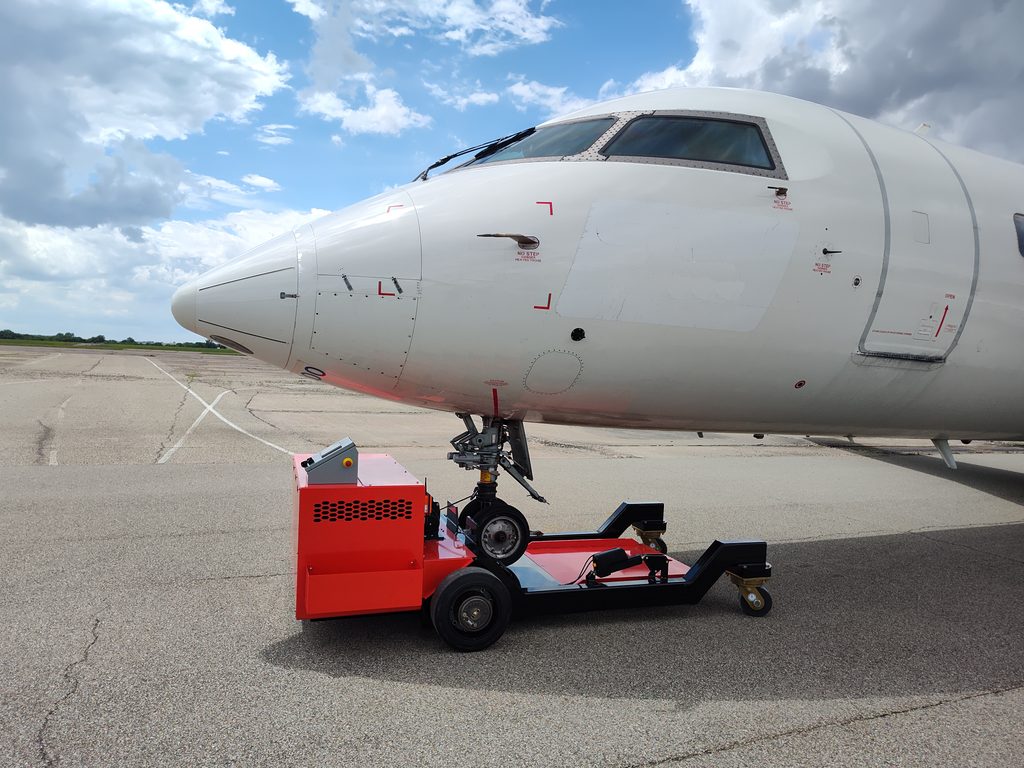
Photo Courtesy of TDI
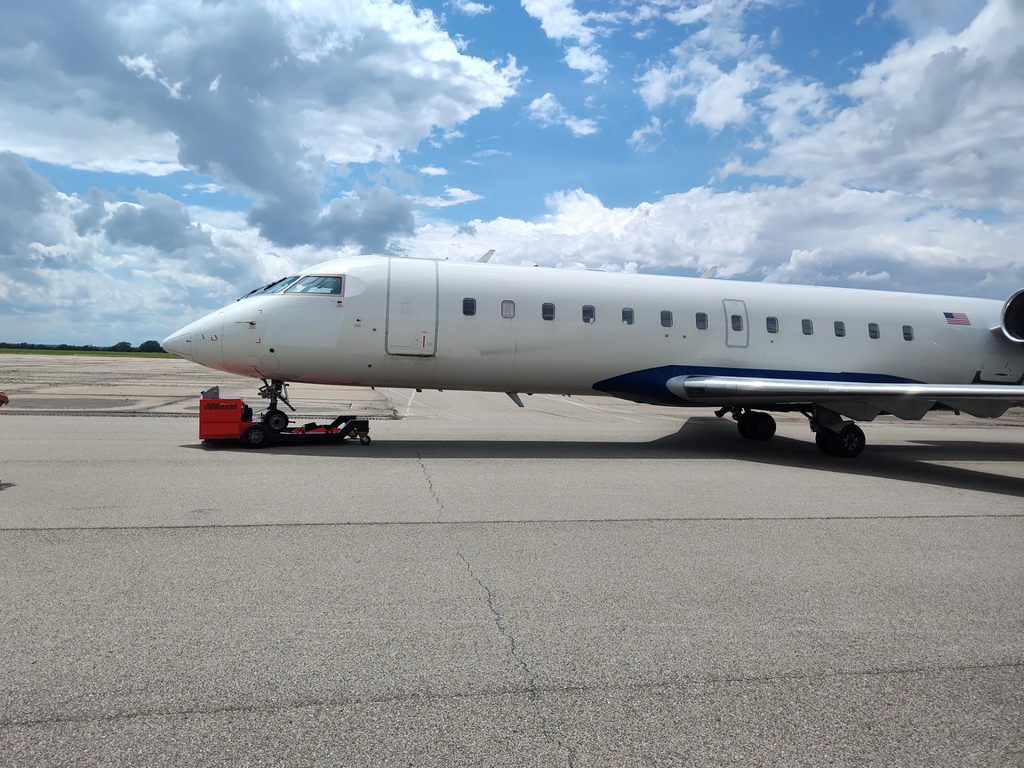
Photo Courtesy of TDI
“We were kind of crazy with a dream and kind of took the first steps to go there, but then with both the funding and TDI supporting us along the way, the powered aircraft mover we have is pretty amazing in our eyes. We just never would have been able to get here without them,” Hunter Chandler said.
Lanz said the Chandlers came to TDI with a strong concept and a clear market opportunity.
“What they were just missing was design and fabrication capabilities – designing it in such a way it was robust and could be taken into the marketplace,” Lanz said. “The prototype device they have now in their hands is capable of doing that.”
Video courtesy of TDI
Today, the Chandlers are demonstrating the prototype in Wichita and Salina as they try to secure their first production orders. If demand continues to grow, they plan to launch manufacturing in Kansas, where the project has been supported from the beginning.
The airplane mover reflects the broader mission of the Rural Technology Innovation Assistance Program: Helping innovators overcome barriers that often prevent good ideas from advancing in rural communities.
The Patterson Family Foundation grant also helps develop future leaders through paid TDI internships and mentoring opportunities.
One of those students is Konner Gepner, a marketing student at K-State from Washington, a rural community in north-central Kansas.
Over the last two years, Gepner has supported TDI clients through patent research, market analysis, website development, Search Engine Optimization, marketing materials, and product packaging design.
“My favorite part is that every day is different,” Gepner said. “(TDI) has provided me with experience and education that my peers don’t have access to.”
The experience has also changed his career path.
Before joining TDI, Gepner said he had little interest in manufacturing. Today, he plans to pursue a manufacturing career after graduating in December of this year. He also hopes to stay in a rural community because of his family connections and appreciation for small-town life.
“Growing up in a rural community, I know good ideas can come from people who see a problem firsthand,” Gepner said. “Through my work at TDI, I’ve been able to help rural innovators explore those ideas while gaining hands-on experience myself. I’m grateful the Patterson Family Foundation supports both rural innovators and students, because where someone lives shouldn’t limit what they can accomplish.”
Lanz said experiences like Gepner’s help students develop professional skills while creating a pipeline of talent for rural communities and industries.
TDI’s work extends beyond any single project, business or industry.
Whether assisting agricultural innovators, manufacturers, entrepreneurs or technology developers, the institute’s goal through the grant program is to help rural communities create economic opportunities.
“We want to try and save the manufacturing jobs that are out there and create new ones where possible,” Lanz said. “But the only way you’re going to do that is innovate new products, new ideas coming forward, and again, we’re trying to do our part to help make those connections.”
The Patterson Family Foundation grant has enabled TDI to support roughly twice as many rural innovators as it did before.
Through the grant, it has supported innovators like RSI Outdoors, a leading hunting blind manufacturer based in Brogue, Pennsylvania, that recently expanded its manufacturing operations and created new jobs in Paxico, Kansas.
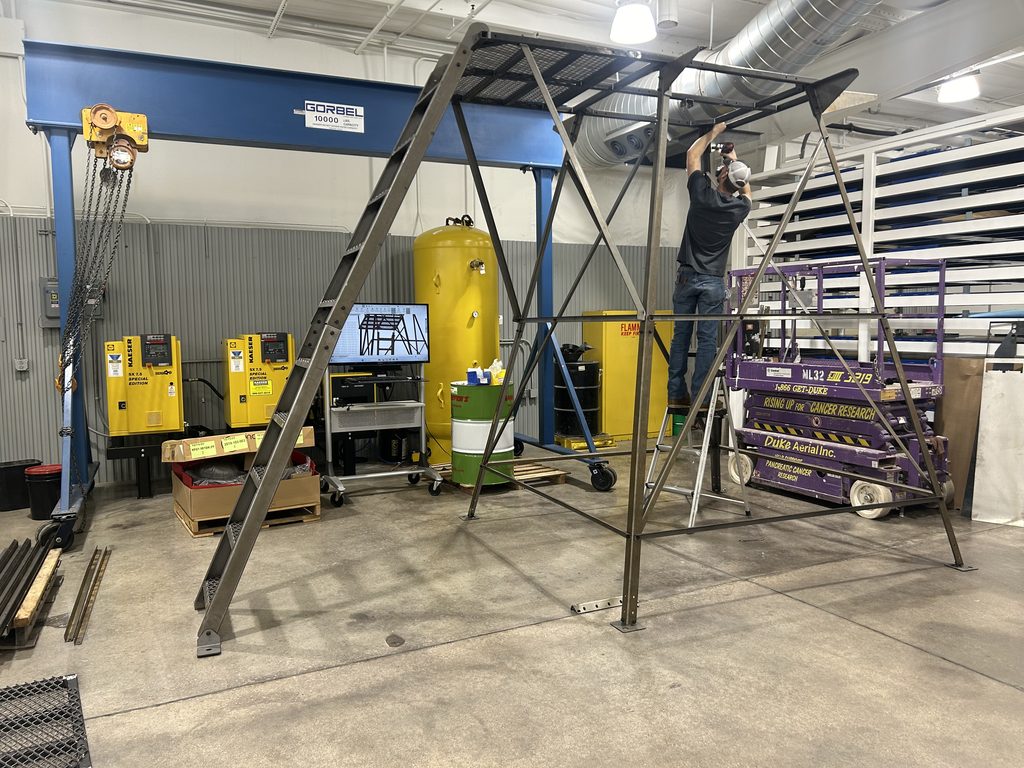
Photo courtesy of TDI
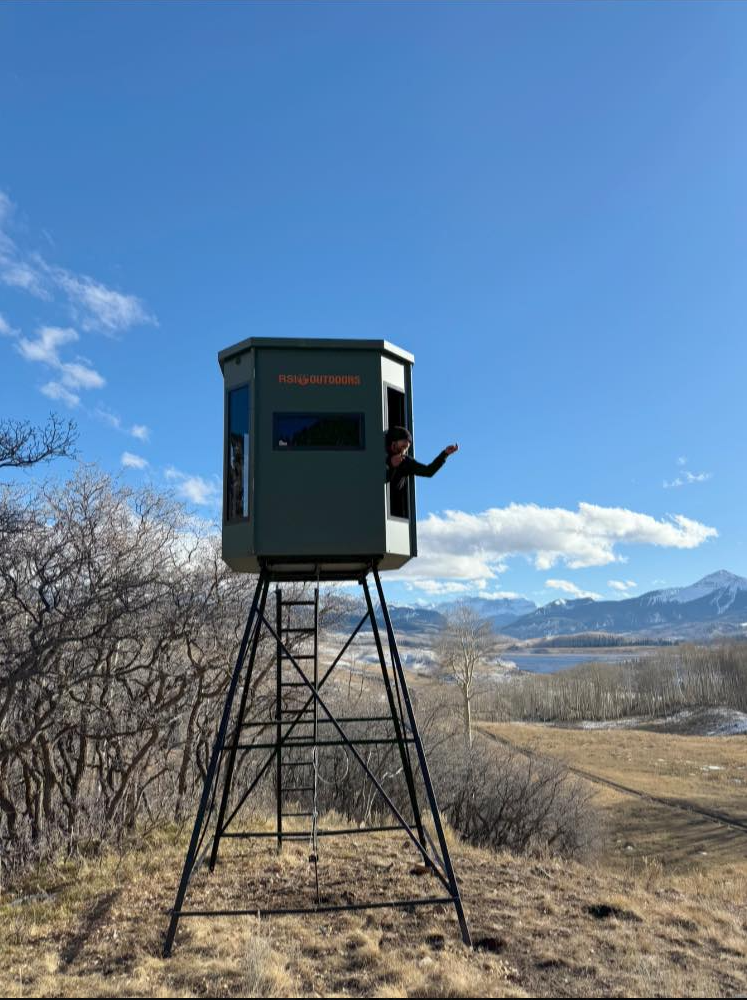
Photo courtesy of RSI Outdoors
TDI worked with RSI Outdoors to design and fabricate new hunting blind stands, along with associated owner’s manuals and marketing materials. TDI’s engineers were leveraged to confirm the blind’s stand can support at least 1,250-1,500 pounds – the highest load rating of any stand on the market.
The skilled team at TDI also helped a local feedlot operator in Finney County, Kansas, draft a provisional patent, create a prototype device, and manufacture 60 additional units for a larger-scale beta test. The device is intended to correct behavioral issues that often arise when groups of cattle are removed from grass pastures and placed in feedlots. TDI designed the product and tested several adhesives to determine which worked best for attaching the device to cattle.
These examples are only a few of the 50 rural Kansas and western Missouri businesses and innovators the program has helped so far.
As the program continues, TDI leaders hope to expand their connections and bring additional resources to rural communities across Kansas and especially western Missouri, where the institute is growing its economic development connections.
“We’re really appreciative of what the Patterson Family Foundation has been able to do to keep us engaged with rural communities,” Tucker said. “If we didn’t have the Patterson Family Foundation funding, we’d be minimally involved with our rural communities.”
In communities like Almena, Kansas, where a fifth-grade class can visit a local inventor and see an idea become reality, the impact is already visible. Through the Rural Technology Innovation Assistance Program, TDI is helping ensure more rural innovators can turn their own ideas into products, businesses and jobs close to home.
To learn more about the Rural Technology Innovation Assistance Program and TDI, visit: https://www.k-state.edu/tdi/about/grants.html.
